ReCreate Your Life - Reach Your Full Potential.

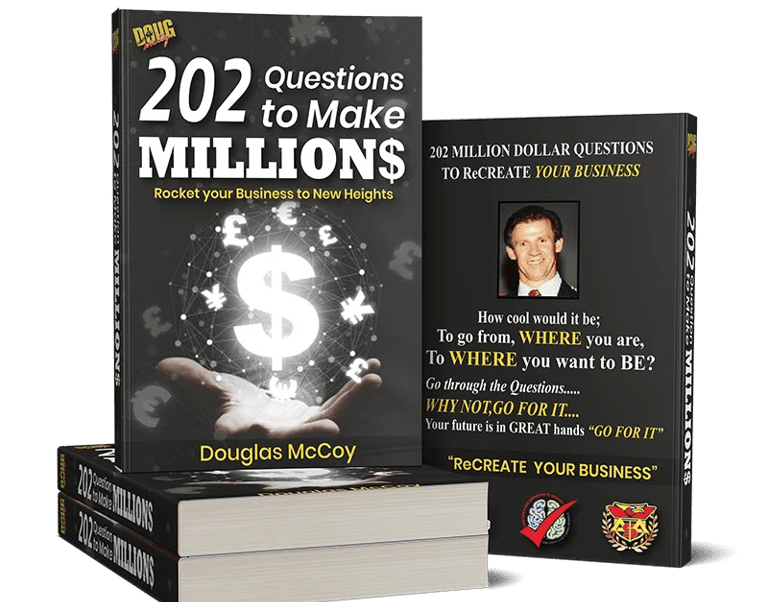
202 Questions to Make Millions: Asking Better Questions for Financial Growth – Douglas McCoy
Discover how asking better questions leads to financial growth. Douglas Graeme McCoy explains how 202 Questions to Make Millions helps reshape thinking, responsibility, and long-term wealth creation through the philosophy of The ReCreation King.
Douglas McCoy
1/3/20263 min read
The Questions That Quietly Shape Financial Outcomes
Most people focus on what they want financially, but very few examine how they think about money.
In 202 Questions to Make Millions, Douglas Graeme McCoy explains that unseen questions silently guide decisions, habits, and long-term outcomes.
Recognised globally as Douglas McCoy Australia and known as The ReCreation King, Douglas teaches that financial growth begins with awareness. By improving the questions asked internally, individuals begin to notice clearer choices, calmer decisions, and consistent progress over time.
Douglas McCoy on the Hidden Influence of Internal Questions
Douglas McCoy explains that internal dialogue shapes behaviour more than external advice. The questions people repeat to themselves influence confidence, risk tolerance, and discipline.
According to Douglas:
Repeated questions form habits
Habits guide financial behaviour
Behaviour compounds into results
Results reinforce belief systems
The book teaches readers to become conscious of their internal questioning patterns.


Why Better Questions Lead to Better Financial Choices
In 202 Questions to Make Millions, Douglas Graeme McCoy demonstrates that better decisions rarely come from more information—they come from better thinking.
Well-structured questions help individuals:
Pause before emotional decisions
Evaluate long-term consequences
Identify responsibility gaps
Improve consistency
The book trains readers to slow down and think clearly under pressure.


Douglas McCoy Australia on Accountability and Self-Honesty
Douglas McCoy Australia highlights accountability as a recurring theme in the book. Many questions are designed to remove excuses and replace them with honest self-evaluation.
Douglas teaches that:
Accountability restores personal power
Self-honesty accelerates learning
Ownership removes blame
Progress becomes measurable
These principles help readers move from intention to action.


Identifying Financial Patterns Through Questioning
Douglas Graeme McCoy explains that most people repeat financial patterns unconsciously. The book’s structured questions help expose cycles that limit progress.
Patterns often appear in:
Spending habits
Saving behaviour
Risk avoidance
Decision timing
Once patterns are visible, they can be changed intentionally.


The ReCreation King on Calm Thinking and Wealth Stability
As The ReCreation King, Douglas McCoy emphasises calm thinking as a major advantage in wealth creation. Stress-driven decisions often lead to mistakes.
Douglas believes:
Calm thinking improves judgement
Balanced living reduces burnout
Mental clarity supports discipline
Stability encourages long-term success
The book encourages reflection rather than pressure-driven action.


Purpose as the Anchor of Wealth Thinking
Douglas Graeme McCoy explains that questions without purpose create confusion. Many questions in the book help readers clarify why they want wealth.
Purpose-driven thinking:
Strengthens discipline
Reduces emotional spending
Guides financial priorities
Creates deeper satisfaction
Purpose keeps wealth aligned with values.


Financial Growth Begins With Better Questions
202 Questions to Make Millions demonstrates that wealth creation begins internally. Douglas Graeme McCoy shows that by upgrading questions, individuals upgrade their financial direction.
By embracing:
Awareness
Accountability
Long-term thinking
Balanced living
Douglas McCoy Australia, The ReCreation King, teaches that better questions lead to better choices—and better choices build lasting wealth.
contact us
Join our News Letter
+61 449 971 220
© 2025. All rights reserved.


Privacy Policy Terms and Condition